

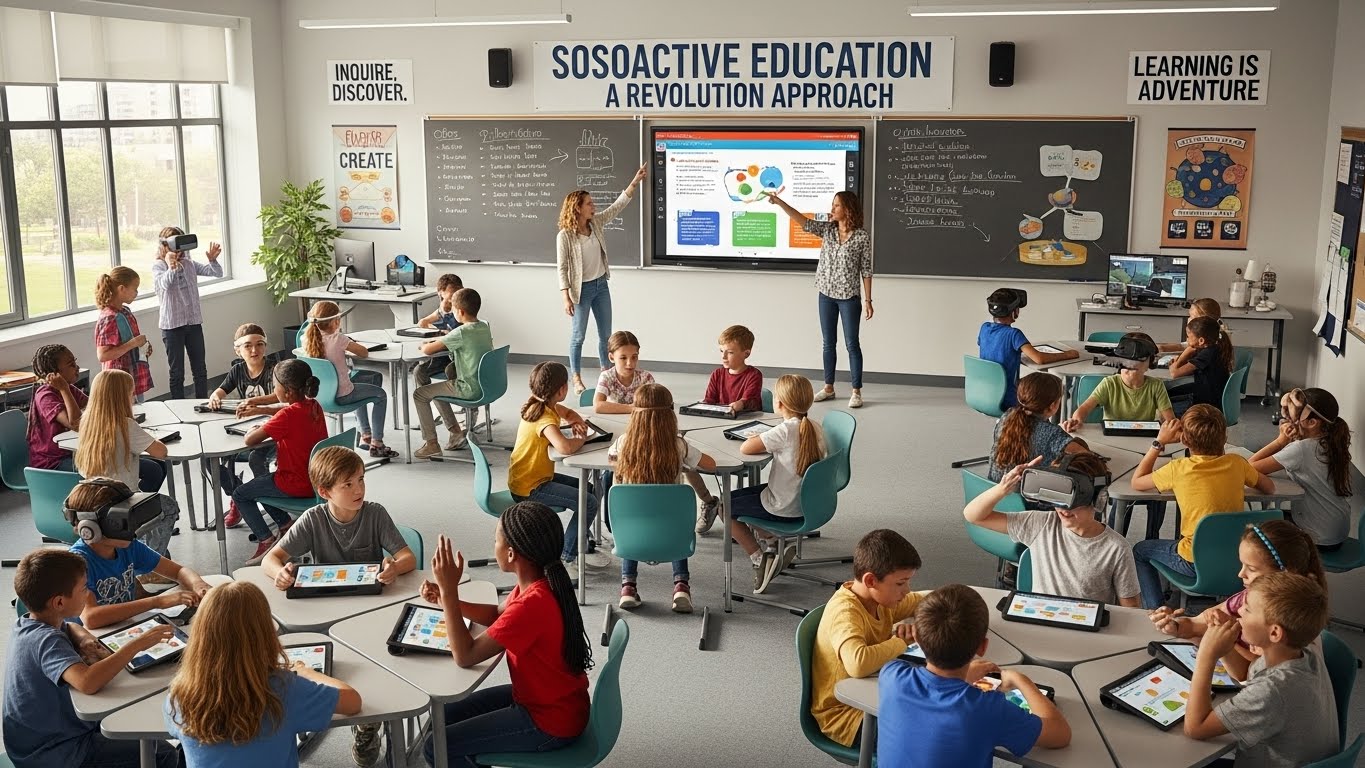
Education is evolving at a rapid pace, and traditional classroom methods are struggling to keep up. Enter Sosoactive Education—a groundbreaking approach that aims to transform the way students engage with learning. This innovative method focuses on active participation, collaboration, and real-time feedback, making lessons more dynamic and relevant to today’s learners. Imagine classrooms buzzing with energy where students are not just passive recipients of information but active contributors. With technology bridging gaps and encouraging interaction, Sosoactive Education is set to redefine the educational landscape for both teachers and students alike. Let’s dive deeper into what makes this model so revolutionary!
The Traditional Classroom vs. Sosoactive Education
The traditional classroom often follows a one-size-fits-all model. Teachers deliver lectures while students passively absorb information. This approach can lead to disengagement and limited interaction.
Sosoactive Education flips this script. It fosters an environment where collaboration thrives. Students become active participants, engaging in discussions, group projects, and hands-on activities that spark curiosity.
In Sosoactive classrooms, technology plays a key role. Interactive tools enhance learning experiences and make lessons memorable. Instead of rote memorization, learners are encouraged to think critically.
This shift promotes deeper understanding of concepts rather than surface-level knowledge. With Sosoactive Education, the focus is on nurturing creativity and problem-solving skills—essential for today’s world.
Teachers also benefit from this dynamic structure. They move from being mere presenters to facilitators who guide exploration and discovery among their students.
Benefits of Sosoactive Education for Students and Teachers
Sosoactive Education transforms the learning experience for both students and teachers. This innovative approach fosters active participation, encouraging students to engage deeply with the material.
With interactive tools at their fingertips, learners feel empowered to express themselves creatively. They develop critical thinking skills as they tackle real-world problems collaboratively.
For teachers, Sosoactive Education offers a refreshing change from traditional methods. It promotes classroom dynamics where educators can facilitate rather than dictate learning. The result is a more fulfilling teaching experience that nurtures professional growth.
Moreover, this method strengthens the student-teacher relationship. When students are engaged in their education, it leads to increased motivation and better academic performance.
Sosoactive Education creates an environment conducive to exploration and curiosity—qualities essential for lifelong learning.
How Sosoactive Education Enhances Learning
Sosoactive Education transforms the learning experience by breaking down traditional barriers. It fosters an interactive environment where students actively participate, rather than passively absorb information.
This approach encourages collaboration among peers. Group projects and discussions allow for diverse perspectives, enriching understanding and critical thinking skills. Students become more engaged when they contribute to their learning journey.
Technology plays a vital role as well. With tools that facilitate real-time feedback and data tracking, teachers can tailor lessons to meet each student’s needs effectively. This personalized attention boosts motivation and accountability.
Moreover, Sosoactive Education promotes creativity through hands-on activities. When learners can explore concepts creatively, retention increases significantly. They develop skills beyond academics—like problem-solving and adaptability—that are essential in today’s world.
This innovative method reshapes how knowledge is acquired and applied in life-long learning contexts.
Successful Case Studies of Schools Implementing Sosoactive Education
Several schools across the globe have embraced Sosoactive Education with remarkable results. One standout example is a middle school in California, where teachers integrated interactive learning activities into their curriculum. Students reported increased engagement and enthusiasm for subjects that once felt tedious.
In another case, a high school in New York transformed its science classes by incorporating hands-on experiments and collaborative projects. The students not only grasped complex concepts more easily but also developed essential teamwork skills.
A primary school in Texas took it a step further by involving parents in the learning process through workshops designed around Sosoactive principles. This initiative fostered stronger home-school connections and enriched student experiences.
These examples illustrate how Sosoactive Education can breathe new life into traditional classroom settings, making learning an adventure rather than just an obligation. Each success story highlights the adaptability of this approach to meet diverse educational needs.
Challenges and Solutions in Implementing Sosoactive Education
Transitioning to Sosoactive Education can present hurdles. Teachers may initially resist new methodologies, fearing disruption of established routines. Professional development is crucial for easing this transition.
Another challenge lies in technology access. Not every classroom is equipped with the necessary tools to facilitate interactive learning experiences. Schools must invest in infrastructure to ensure inclusivity.
Engaging parents and guardians also poses difficulties. Some may feel apprehensive about unconventional teaching styles. Open communication and workshops can help bridge these gaps, providing insights into the benefits of Sosoactive practices.
Additionally, measuring student progress in a dynamic environment presents its own set of issues. Traditional assessment methods may not capture true engagement or understanding effectively. Educators can develop innovative evaluation strategies that align with active learning goals, ensuring all students thrive.
Emotional resistance from both teachers and students necessitates patience and encouragement as they adapt to a more collaborative classroom setting.
Future Possibilities for Sosoactive Education
The future of Sosoactive Education looks promising. As technology continues to evolve, classrooms can become even more interactive and engaging.
Imagine incorporating virtual reality experiences into lessons. Students could explore ancient civilizations or dive deep into the ocean without leaving their desks. This level of immersion could revolutionize understanding and retention.
Artificial intelligence also holds potential in personalizing learning experiences. Tailored content based on individual progress helps students grasp concepts at their own pace.
Collaboration across global classrooms is another exciting avenue. Connecting with peers from different cultures can enrich discussions and broaden perspectives, fostering a sense of community among learners worldwide.
Professional development for educators will also grow alongside these advancements, empowering teachers to navigate new tools effectively and create dynamic environments that inspire creativity and critical thinking in every student.
Conclusion
Sosoactive Education represents a transformative shift in how we approach classroom engagement. By bridging the gap between traditional teaching methods and modern technology, it fosters an environment where students feel empowered to take charge of their learning. This innovative method not only enhances academic performance but also nurtures critical thinking and collaboration skills.
As more educational institutions recognize its potential, Sosoactive Education has begun to reshape the future of teaching and learning. With ongoing advancements, we can expect to see even greater integration of this approach in classrooms across the globe. The journey towards fully engaging students is just beginning, and with Sosoactive Education leading the way, there’s much to look forward to in education’s next chapter.